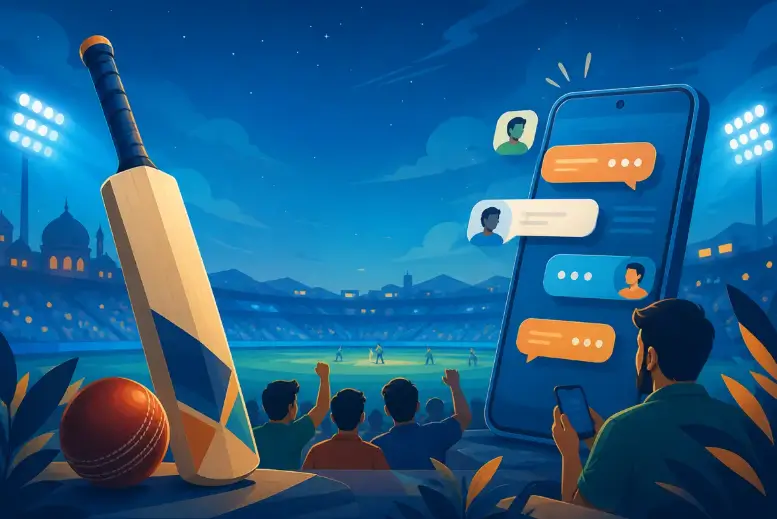
A cricket match generates much more than a score. Before the first ball, the fans are already speculating on the possible standout players, conditions on the pitch and team selection. On the start of play, new numbers, reactions and opinions come along. This conversation has been enabled nearly 24/7 thanks to mobile access. Live scores, social feeds, private chats, and services connected with desi india cricket betting can all become part of the same match day routine. By the time the final ball is delivered, fans may have spent hours talking about moments that lasted only a few seconds on the field.
The Conversation Begins Before Anyone Starts Batting
The toss can change the mood of a cricket discussion within minutes.
Before it happens, fans may debate which side appears stronger or whether a particular player should be included. Once the teams are confirmed, attention moves toward the actual lineup. After the toss, pitch conditions and the decision to bat or bowl provide another topic.
This early conversation matters because it gives fans a reason to become involved before the scoreboard moves.
A match between familiar rivals can create even more discussion. Previous meetings, recent form, and memories from earlier tournaments all become part of the build up.
By the first delivery, many groups already have several predictions waiting to be tested.
Every Over Gives Fans Fresh Material
Cricket changes gradually and suddenly at the same time.
A partnership may build for several overs without much movement in the score rate. Then a wicket, a six, or a tight bowling spell can change the direction of the game within minutes.
Fans respond to those changes immediately. They compare required run rates, bowling figures, partnerships, and individual performances. Someone who expected a comfortable chase may rethink that view after two quick wickets.
Live data keeps adding context. A score alone tells only part of the story. Current run rate, overs remaining, boundaries, and recent deliveries help explain how the match reached its present position.
One Ball Can Replace the Entire Topic
Cricket conversations are rarely fixed.
A group discussing a batter’s strong innings may forget that subject the moment a run out occurs. Attention can switch immediately to the new player, the fielding decision, or the number of overs remaining.
The match constantly provides a new reason to talk.
Private Chats Turn Reactions Into Group History
Public commentary shows what thousands of people are saying. Private groups create something more personal.
Friends remember previous predictions. They know who supports a particular player and who always expects an unlikely comeback. Those details give ordinary match events an extra layer.
Over time, groups collect their own references:
- Nicknames for players and teams.
- Screenshots from memorable matches.
- Predictions that turned out unusually well.
- Running jokes about earlier performances.
- Phrases that return whenever a similar situation appears.
These references give each group a style of its own.
A comment that seems meaningless to an outsider can remind regular members of a game watched together two seasons earlier. Cricket becomes connected with the history of the group as well as the official tournament record.
Public Platforms Create Thousands of Versions of the Same Match
Social media expands the conversation far beyond friends.
The same wicket can generate tactical analysis, humor, statistics, short video clips, and emotional reactions within minutes. Supporters of opposite teams may interpret the moment in completely different ways.
This variety makes live sport especially suited to online discussion. There is rarely one accepted interpretation of what just happened.
A captain’s decision might look clever to one group and surprising to another. A batter playing slowly may be seen as patient by some fans and overly cautious by others. Both views can develop while the innings is still underway.
The match becomes a shared event, but the discussion around it remains highly individual.
The Final Ball Simply Changes the Subject
Once the result is known, fans do not suddenly run out of things to say.
Attention shifts toward the moments that shaped the game. A short bowling spell, an unusual field placement, or a partnership from the middle overs may look more meaningful once the final score is available.
Highlights then bring those moments back onto screens. Statistics make comparison easier. Tournament standings show what the result means for upcoming fixtures.
Soon the discussion moves forward again. The next match brings new selections, new predictions, and new possibilities.
It is for this reason that a single cricket match can generate hours of discussions. With the help of social media platforms people share their views on each other’s favorite moments during the game or make comments and jokes about things that happened in the match. As a result, these conversations keep going way past the time the game has ended and the players have left the ground.
